It’s so easy (and usual) to be Right, but say it from an ugly heart. It makes the Truth ugly. Truth really can’t be ugly, though. Here are some thoughts:
I’m now blogging in English and Russian at annesokol.com, if you’d like to come on over.
Posted in Uncategorized | Leave a Comment »
Last Sunday we had a Ukrainian single guy missionary give his testimony in church about his mission trips to various places. We gave him an offering, and I gave him some money personally. But as we drove home, I felt kind of bad that no one had offered to have lunch with him. I remembered times in village life in Ukraine– they pretty much always had lunch for visitors.
So … I’m studying Homemaking and Hospitality this year.
This Sunday, we’re having a pretty well-known Ukrainian man singer come and sing. It’s good for inviting unsaved friends, as he sings great and shares his rather interesting testimony of how he came to the Lord.
And lunch? What can I do? …. So Monday, I called our elder pastor’s wife, and I asked her if I could do lunch for the visitors and her and her husband. She asked if it’s something at our home, or just there in the building after the service? So I asked her what would be better? She said she’d talk to her husband and get back with me. … She calls me back Wednesday, says her husband recommends doing it at the church building after the service. I said, OK, I can bring plov (a rice dish with meat chunks, sweet peppers, fried carrot/onion– it’s good for a group). And all the disposable cups and plates, etc. She wanted to bring the drink (kompot) and desert.
I need to get my ducks in a row today, Thursday, because all day tomorrow and Saturday, Vitaliy and I are attending a missions conference in Belaya Tserkov (a town 30-45 minutes away).
The hospitality book I’m reading suggests writing out a prayer for the event. So I will do that. And just pray as I work now thinking and planning.
So, approximately 10 people, and my list of needs:
Rice, meat, plov spice packet, peppers. (I already have plenty of carrots and onions)
Paper big plates, small plates, napkins, forks, cups, small spoons for sugar stirring in tea/coffee.
Just in case: tea bags and instant coffee packets and sugar. (Our church has tea after every service, so they might have these things already. There’s also a small tea/coffee machine in the entry of the building we rent, so we could just use that if needed.)
My plan is to make the plov in the pressure cooker– put it in Sat before bed, and just take it to church and plug it in on the warming function. Or, it just occurred to me, that I could put everything in Sunday morning, plug it in at church and let it cook during the service.
I also realized I need to make a salad and I want to take bread and mayonnaise (those are to staples for the “Ukrainian table.”) I need to add this to my shopping list. The salad I can ask Vitaliy’s mother to make while she’s babysitting our kids Saturday. And it needs to be a kind of salad that doesn’t get ruined by sitting overnight– Vitaliy wants the salad named olivye (it’s well-loved here generally).
Shew, I’m glad I’m writing all this out! I helps me think through all the details. And to see now, can I add something extra? A small gift to send with them maybe? I need to pray and think about that, too. I’ll ask Vitaliy if he has any thoughts.
And just to think about how to help them feel welcome.
Another thing I realized as I thought about this. Years ago, when I visited Ukraine, it used to bother me that the man would sit at the table to talk to me/othervisitors, and the wife would bustle around the kitchen getting stuff for us. In the American tradition, everything is set out and the husband and wife both sit to converse. But I’m starting to get, even myself, that the way I express hospitality (my love of having them with me) here in Ukraine is by moving things, keeping plates and drinks filled, letting people talk while I bustle around….. It’s the style here. Maybe because there is so little room on and around the tables in the first place, that it’s necessary to keep moving/removing…. ?
This is such an intriguing process!
Edited to add: Here is a photo of the couple and our lunch. I ended up hosting it right in the church hall with the elder pastor and his wife and another church member or two.

Posted in hospitality, Life in Ukraine, Uncategorized | Leave a Comment »
I love that I hung these decorations across the kitchen window. It’s so homey to me, I can switch around what I clip up there, it’s cheap/free, and it’s portable (since we rent).
The wedding bell in the center is because March is our anniversary month!
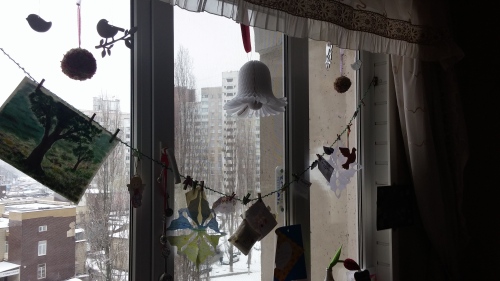
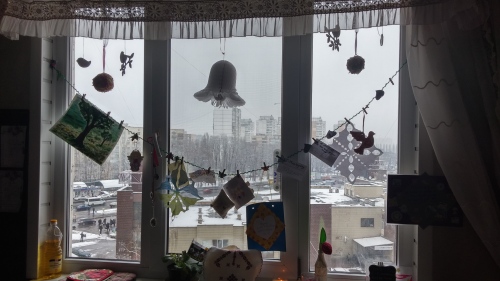
I also crossed a big hurdle today: cleaning the girls’ room. We went through and purged, sorted, stored the toy box, threw away a bunch of stuff-we-are-done-with. It wasn’t anything major, but for that room, it was a good thing to do. I still need to go through and make a complete list of jobs that will pretty entirely clean that room (like wiping doors down). I also noted that the girls don’t have great clothes-keeping places, so I might tuck that in the back of my mind for a nice purchase if we see something like a dresser.
Onward ho!
Posted in creativity, housekeeping, Uncategorized | Leave a Comment »
I think sometimes pretty deeply about the ramifications of being pro-life. I mean, so many people are really, really worried about population control, the earth’s resources, inequality ….
These people think a lot about these issues. All the ink and cyberspace committed to these problematic issues. The mega-money. The government policies. Birth control. Abortion. Oh. My. Word.
People are so worried about this. And the issues are real. …. But the proposed answers?
I began to think about this as we visited churches that support us. We drove by miles and miles and miles (and miles, and miles) of unused, beautiful earth. Why does no one talk about this? Why does no one envision life?
And I think: How does God think about this? Did He really create such an inadequate earth? It would be so easy for Him to stop creating souls, stop allowing children to be born. But He doesn’t stop! … What amazing inventions have been hidden from us, undiscovered, because we approach this issue with a crisis, impoverished mentality?
Could we not … dare to imagine a world where we are all committed to welcoming new life? What would we invent? What would we create? What relationships would be forged? How would we be changed and challenged as nations if we committed ourselves to creating policies, committed ourselves to finding solutions for everyone, committed ourselves to stewarding and sharing the resources of this amazing earth?
So I’m just putting this out there, especially for the young. Maybe God wants you to dream, to invent, to create— to reveal to the world His welcoming and providing heart that accepts all the new lives He creates in and through us.
Posted in abortion, childbirth, creativity, culture, faith, pro-life!, Uncategorized | 1 Comment »
For our recent 12th anniversary, our two daughters bought us this statuette.
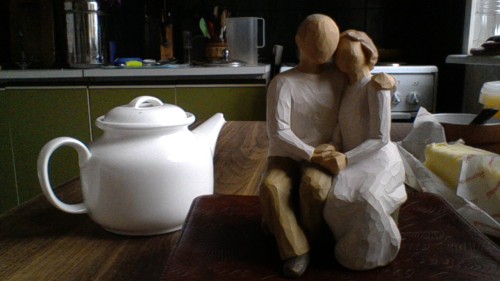
You know, it was rather expensive…. I wouldn’t have spent the money on it myself. And, when the girls bought it, I almost stopped them.
I mean, really. It’s a statuette. A piece of ceramic or whatever it’s made of. And it’s pricey.
But, I stopped myself from stopping them. And I thought, you know, how wonderful that they want to spend a lot of money on their mom and dad who love them and love each other. It DOES COST A LOT to have that. It might not necessarily be a monetary cost, but it’s an even greater cost, a deeply personal cost.
And I think it’s OK that we sometimes spend a lot of money on what really has a lot of value.
It reminds me of spending over a thousand dollars to fly to the States and stay there for a week during my pastor’s retirement service. I wanted to see all the old staff, be a part of honoring a godly man in my life, and it cost money! But it was spending money on what is of real value to me.
At our family group, ladies were talking about how hard it was for them to accept flower bouquets from their husbands– because it really seems like spending money on something frivolous. Flowers quickly pass away. But we can look beyond, and see that it’s really spending money on something you really value– your love and commitment to each other.
We can’t always spend money on these things, but they are wonderful things to spend money on 🙂
Posted in Family, money, special things, Uncategorized | Leave a Comment »
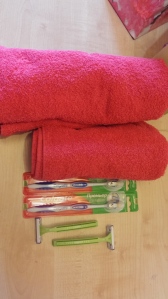
So, in one of the books I’m studying this year about hospitality, the author mentioned putting aside a cache of stuff for guests, like clean towels and sheets, so they’re always ready. It’s brilliant because I find myself scrambling sometimes when it’s unexpected overnight guests.
So, I started the collection a few days back when I saw sets of towels on sale in the mall. I bought two sets (a large and small towel in each set). Cost about $6 each.
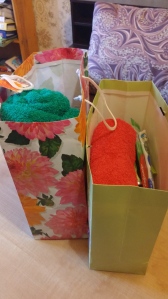
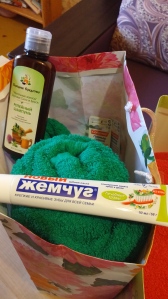
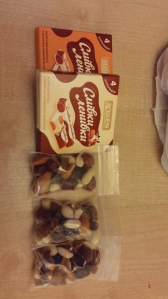
To that idea, I recently added toothbrushes, toothpaste, shampoo and conditioner, and then some nuts and chocolate as snacks. The only thing I still need to get a handle on is having a set of clean sheets– I need to buy a duvet set and keep it separate and clean for guests, I think. And some water bottles. Not everything is necessary, but it’s just nice and friendly. Welcoming.
About 2 years ago, I started praying that we could have more hospitality opportunities, like people spending the night, and it’s been interesting seeing that prayer answered! The girls are helping me with this guest project now and asking who will come, and I say, I’m praying– we’ll see who God sends!
Here are photos of what I’ve done so far (I’m storing things in gift bags, as I have a lot of those):
Posted in hospitality, housekeeping, Uncategorized | Leave a Comment »
I’ve started preparing the Lord’s supper supplies for our church lately, as we’ve had a bit of a gap in this ministry. It revolved to Vitaliy, and he was gone, so I was making sure it got done.
I actually like doing it. We take Lord’s supper the first Sunday of each month, during the morning service. Our church only has a morning service all together (for the whole week), since we rent the hall in the House of Culture for meetings.
The supplies are kept locked in the somewhat-large safe that in the storage closet the House of Culture supplies our church (for all the AWANA supplies, nursery, etc.)
Anyway, in Ukraine, a cross-stitched cloth is spread out under the bread and juice display. We have two cross-stitched cloths, and I noticed that one was very dirty, a bit stained, and not ironed. So I brought it home.
In my homemaking skills studies this year, I’m doing more with laundry stain remover. (Not all my experimenting has been successful, I will note.)

So I soaked the cloth overnight in cool water with the whites stain remover. I scrubbed the spot with the deep stain. And it all got really clean! and none of the thread colors ran out! So I ironed it, folded it, and stored it in a clean, large, sealable baggy. I think I will keep them both in this baggy, as they were just open in the safe laying there. … Trying to get this ministry’s supplies well organized so that it can be easily passed on soon.
(We also wash and re-use the little communion cups, as we have to order them from the States.)
The cross-stitched words say “do this in remembrance of Me.”

Posted in housekeeping, Life in Ukraine, Uncategorized | 1 Comment »
It’s easy, as a modern mom, to let the time slide by with my kids all parked with various screens. I declared yesterday a no-screen day (until evening). So we had to be busy with things. I will keep it honest, and say it is tempting/irritating doing things with children, but I’ve gotten used to that a lot, and I tried to minimize that feeling, in a good way, and just let it be messier and irritating and be OK with all that. Because, hey! 🙂 It’s a lot more together and interesting, too.
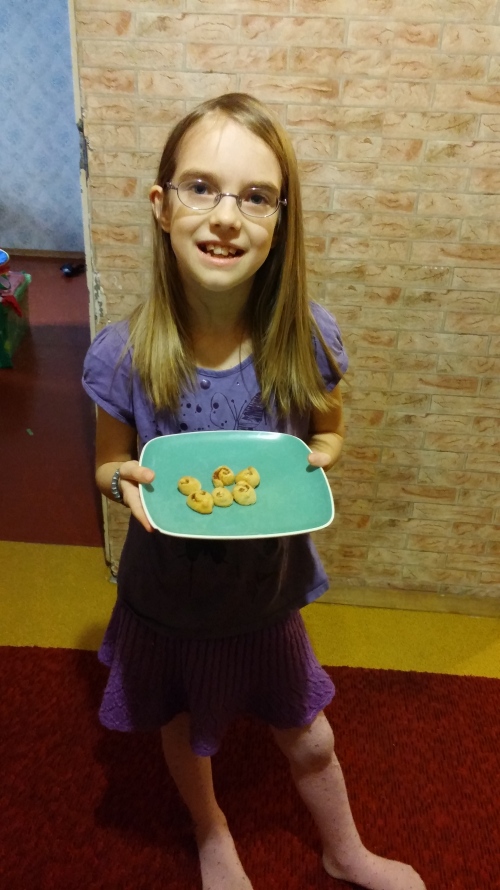
Sally Clarkson’s latest book, The LifeGiving Home, inspired me to make cinnamon rolls, and we had a baby shower here last night, so I made a double batch. It was very yummy all around. Here are some photos.
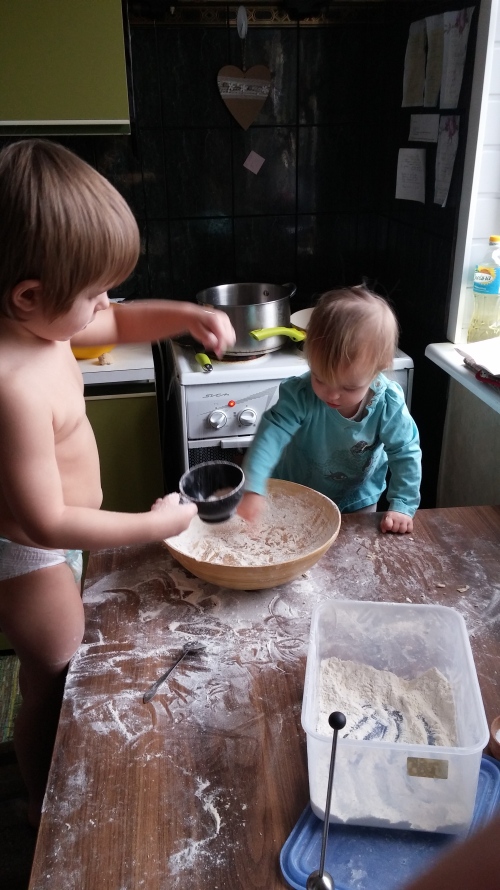
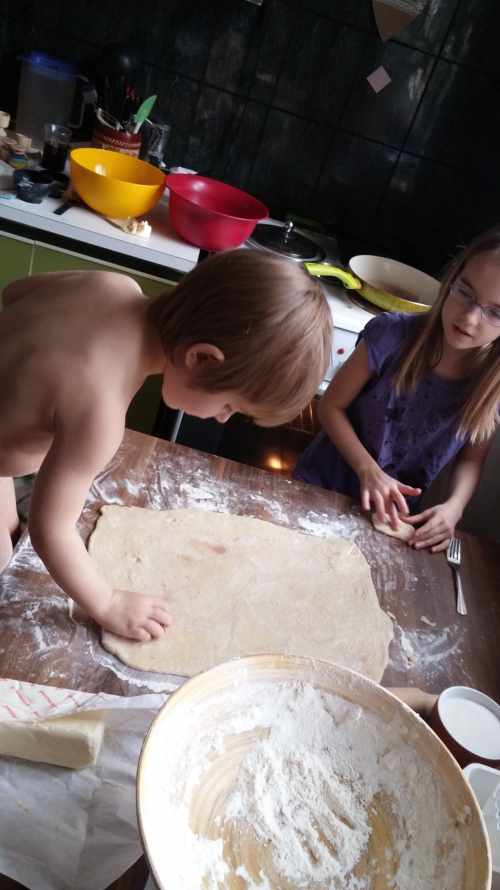
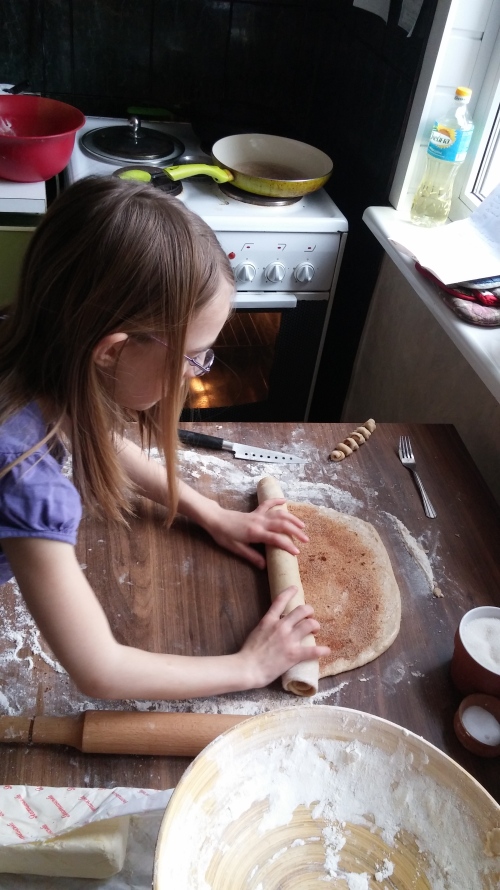

Vika took a small piece of dough and made a mini-batch.
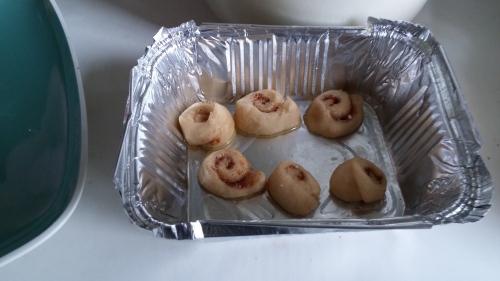
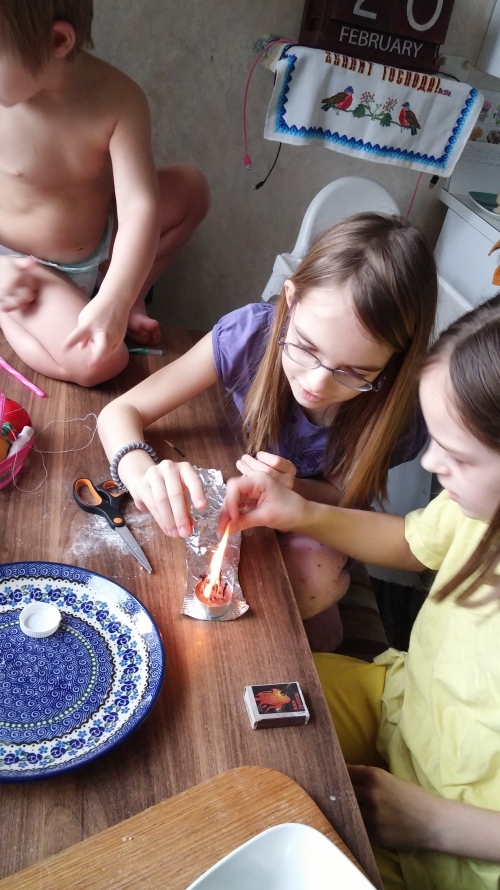
I let my children play with fire. In my presence. I figure it lets them experience the fascination in a safe place.
Posted in Family, Uncategorized | Leave a Comment »
The last, oh about 4-5 years of my parenting have been a time for me to be silent. About parenting, I mean. Although this is a topic I feel compelled to talk about. A topic I love and love to study and contemplate.
Two reasons that I see right now. First, I’ve just had to be living out the beliefs and wisdom God has given me. And you know, parenting questions are matters of conscience and a parent’s personal growth, so partly, I’ve just had to be quiet and live out what I’ve been led to live. To test the fruit that will be borne of these things.
But second, it was a time in our church when certain people were not open to me. I should say, when my husband became the main pastor, the grumps put their crosshairs onto him. And so, personal things we might have shared just had to be put aside for that time of ministry….. I actually never saw an end coming, but … that period of our lives (V as main pastor) is coming to an end now, and so people’s relationships to us in the church are transitioning, and the grumps are somehow also the gateway to a lot of things in our little circle. Or, maybe just God is the gateway. And He used the time of quietness to teach certain things to me and to others. And now it’s transition time.
People are asking and there’s a hesitant openness.
It’s a moment to speak, but also to build trust. And to not be anyone’s expert, but to point people to God, who has all the answers in His Word and the Holy Spirit. But it’s still important to speak at the appropriate moments. … I’m trying to do that. You can pray for me. It’s hard for me … to speak and to remain silent.
Posted in church life, Uncategorized | Leave a Comment »
 Do Justice, Love Mercy, Walk Humbly with God